

Hey there! As a supplier of perforated metal mesh, I often get asked about how this nifty product can achieve sound insulation. Well, let's dive right in and explore the science behind it.
First off, what exactly is perforated metal mesh? It's basically a sheet of metal that has been punched or drilled with holes of various shapes and sizes. We offer a wide range of options, like the Decorative Perforated Panel, Rectangle Perforated Panel, and Hexagonal Perforated Panel. These panels can be used in a bunch of different applications, from architectural design to industrial settings.
Now, let's talk about sound insulation. Sound is essentially a wave that travels through the air. When it hits a surface, part of it gets reflected, part gets absorbed, and part passes through. The goal of sound insulation is to reduce the amount of sound that passes through a material.
Perforated metal mesh achieves sound insulation through a couple of different mechanisms. One of the main ways is through absorption. When sound waves hit the perforated metal mesh, they enter the holes and get trapped inside. As the sound waves bounce around inside the holes, they lose energy due to friction with the metal surface. This energy loss results in the sound being absorbed, reducing the amount of sound that passes through the mesh.
The size and spacing of the holes in the perforated metal mesh play a crucial role in its sound absorption capabilities. Smaller holes and closer spacing generally result in better sound absorption, especially for high-frequency sounds. This is because smaller holes create more surface area for the sound waves to interact with, increasing the chances of energy loss through friction.
Another factor that affects sound insulation is the thickness of the metal. Thicker metal generally provides better sound insulation because it is more resistant to the passage of sound waves. However, it's important to find the right balance between thickness and other factors like weight and cost.
In addition to absorption, perforated metal mesh can also reduce sound transmission through reflection. When sound waves hit the metal surface, some of them are reflected back in the direction they came from. This reflection helps to prevent the sound from passing through the mesh and into the other side.
The shape of the holes in the perforated metal mesh can also influence its sound insulation properties. For example, round holes tend to provide more uniform sound absorption compared to other shapes. This is because the round shape allows the sound waves to enter and bounce around inside the holes more easily.
Now, let's talk about some real-world applications of perforated metal mesh for sound insulation. In architectural design, perforated metal mesh can be used as wall panels, ceiling tiles, or partitions to reduce noise levels in buildings. It can also be used in industrial settings, such as factories and warehouses, to reduce the noise generated by machinery.

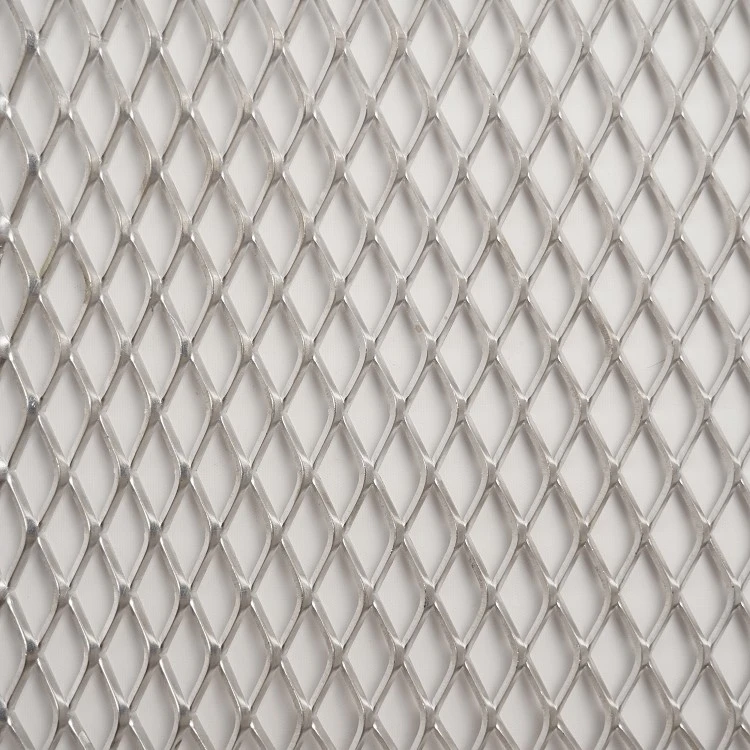
In the automotive industry, perforated metal mesh can be used in the engine compartment to reduce engine noise. It can also be used in the interior of cars to improve the acoustic comfort for passengers.
One of the great things about perforated metal mesh is its versatility. It can be customized to meet the specific sound insulation requirements of different applications. We can adjust the hole size, spacing, shape, and thickness of the metal to optimize the sound insulation performance.
If you're interested in using perforated metal mesh for sound insulation, it's important to work with a reliable supplier. At our company, we have years of experience in manufacturing high-quality perforated metal mesh. We use advanced manufacturing techniques to ensure that our products meet the highest standards of quality and performance.
We also offer a wide range of customization options to meet your specific needs. Whether you need a specific hole size, shape, or finish, we can work with you to create the perfect perforated metal mesh for your application.
So, if you're looking for a cost-effective and efficient way to achieve sound insulation, consider using perforated metal mesh. Contact us today to learn more about our products and how we can help you with your sound insulation needs. We'd be happy to discuss your project and provide you with a quote.
References
- Beranek, Leo L. Noise and Vibration Control. McGraw-Hill, 1971.
- Kinsler, Lawrence E., et al. Fundamentals of Acoustics. Wiley, 2000.
- Fahy, Frank J. Sound and Structural Vibration: Radiation, Transmission and Response. Academic Press, 2001.


