



Oil Shale Shaker Screen
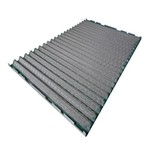
Oil shale shaker screen is a kind of screen that installed in shale shakers. It is widely used in oil extraction and drilling operations to filter drilling fluids, oil and mud. Our oil shale shaker screen is made of two or three layers of stainless steel wire cloths with different meshes.
Benefits of Oil Shale Shaker Screen
Solids removal and fluid recovery
The primary function of a oil shale shaker screen is to remove drilled solids, cuttings, and debris from the drilling fluid, also known as mud. Oil shale shaker screen utilize vibrating screens with varying mesh sizes to separate solids of different sizes from the fluid. By effectively removing solids at the surface, oil shale shaker screen help maintain the drilling fluid’s desired rheological properties and chemical composition, ensuring optimal performance and minimizing fluid wastage.
Increased drilling efficiency
Oil shale shaker screen are crucial in improving drilling efficiency by reducing the time and resources required for solids control. By removing solids from the drilling fluid immediately after they enter the wellbore, oil shale shaker screen prevent solids buildup in downstream equipment such as mud pumps, mud pits, and circulating systems. They are effectively the “first line of defense” in solids control. This reduces the risk of equipment wear, clogging, and downtime, allowing drilling operations to proceed smoothly and uninterrupted.
Protection of downstream equipment
In addition to enhancing drilling efficiency, oil shale shaker screen help protect downstream equipment from damage caused by solids and debris. Solids control is essential for preserving the integrity of additional equipment like mud pumps, mud motors, drill bits, and other critical components in the drilling system. By removing abrasive particles and reducing fluid contamination, oil shale shaker screen extend the lifespan of equipment and minimize maintenance costs associated with repairs and replacements.
Environmental stewardship
Oil shale shaker screen contribute to environmental stewardship by minimizing the environmental impact of drilling operations. Efficient solids control prevents contamination of drilling fluid with harmful substances such as heavy metals, hydrocarbons, and drilling chemicals. By removing solids at the surface, oil shale shaker screen reduce the volume of waste generated and facilitate proper disposal or recycling of drilling fluids, promoting sustainable practices and regulatory compliance.
Versatility and adaptability
Modern oil shale shaker screen are designed to be versatile and adaptable to various drilling conditions and fluid properties. They can accommodate different types of drilling fluids, including water-based, oil-based, and synthetic-based muds (muds are another term for “drilling fluids”), as well as varying levels of solids content and particle sizes. Adjustable settings such as vibration intensity, screen angle, and deck inclination allow operators to optimize performance and achieve efficient solids control in diverse drilling environments.
Real-time monitoring and control
Advanced oil shale shaker screen are equipped with sophisticated monitoring and control systems that provide real-time data on drilling fluid properties, solids content, and screen performance. Integrated sensors and instrumentation allow operators to monitor key parameters such as flow rate, pressure, and temperature, enabling proactive management of solids control processes. By promptly identifying and addressing issues such as screen blinding, wear, or fluid loss, operators can maintain optimal oil shale shaker screen performance and maximize drilling productivity.


Why Choose us
Experience and expertise
Our company strives for survival by quality and development by reputation. After years of development, it has established its own production and processing site, covering an area of about 30,000 square meters. It has grown to hundreds of employees.
Cutting-edge technology
The company is committed to the development of real industrial technology, Production of various specifications of stainless steel screens, petroleum vibrating screens, decorative nets, mud nets, expanded metal, punched plates, gas-liquid filters, wedge wire filter tubes and other products.
Excellent customer service
Our customer service team is dedicated to ensuring our clients receive prompt and professional services.
Flat Shaker Screen
The Flat Shaker Screen have a flat, smooth surface and are generally less expensive. They are more suitable for removing larger-sized solid particles from drilling fluids but may not be as effective with finer cuttings.
Hook Strip Flat Screen
- The hook strip flat screen features a single layer mesh bonded directly to the screen panel. Its simple structure and easy installation method makes it a popular choice among operators. This screen type is effective in removing larger solids from drilling fluid.
- Hook strip flat screen is very popular choice in the oil and gas industry. The hook strip flat screen have a simple light weight structure, with high operational efficiency and good fluid handling capacity. It works by preventing solids from passing the screen.
- When comparing hook strip soft screen with hook strip flat screen, the hook strip flat screen is more durable and reliable. It has the capacity to filter out the mud and other impurities efficiently in oil. This type of screens are extensively used as vibrating screen in the oil production industry due to its efficient capacity in waste management and drilling fluid control.
Hook strip soft screens
- Hook strip soft screens is one of the types of shale shaker screens, designed to be easily installed and replaced, making them a cost-effective option with high screen turnover.
- The screens are made from two or three layers of stainless steel wire mesh, and the structural design of the hook strip soft screen is similar to hook strip flat shaker screen.
- Hook strip soft screens are designed in a way that it can be easily installed and replaced, making them cost-effective for shakers with high screen turnover.
- The mesh size of these screens is available in various types and sizes.
- Selecting the right shaker screen depends on different drilling conditions.
- The specifications of hook strip soft screen can be customized according to the industrial requirement.
Steel Frame Screen
- Steel frame screens is one of the types of shale shaker screens, constructed with a steel frame in combination with 2 or 3 layers of stainless steel woven wire mesh and perforated plate to achieve efficient solids separation. The steel frame, robust construction adds strength and durability, making it suitable for high volume drilling operations.
- The steel frame screens are suitable for both oil based and water based drilling fluids.
- Compared to hook strip flat screen and hook strip soft screens, the steel frame screen has higher strength and better abrasive resistance. Thus ensuring a better loading capacity and operational efficiency of the screens.
Pyramid Screen
- Pyramid shaker screen also called three-dimensional shale shaker screen is one of the types of shale shaker screens with a single side screen compression system. The mesh size of pyramid screens are smaller than steel frame shaker screens. The fine mesh size maximizes the solids removal capacity of the screen.
- These types of shakers, maximize the solids removal capabilities of the screen and is optimal for various shakers types, such as, linear, elliptical and circular motion shale shakers.
- Compared with the flat hook strip & soft hook strip shale shaker screen, pyramid shaker screen has more available screening non-blank areas.
- Tests has shown that, due to the screen's corrugations structures, the capacity of the shale shaker screens gets about a three-fold improvement, while the screen still maintains the equivalent cut-point level of the flat shaker screen.
- Its application reduces the number of shakers which reduces the total space and shale shaker screen pricing.
Composite Frame Screen
- Composite frame screens consist of two or three layers of stainless steel mesh with a composite material frame which provides enhanced durability and resistance to wear and tear. Different mesh layers have different density, when arranged properly can enhance the screen's capacity.
- This innovative design provides enhanced durability and resistance to wear and tear. Composite frame screens offer extraordinary performance in both onshore and offshore drilling applications.
- Composite frame screens feature a composite material frame, combining the strength of steel with the corrosion resistance of plastic. Composite frame screens offer excellent performance in both onshore and offshore drilling applications.
Corrugated Shaker Screen (PMD)
- Corrugated shaker screens have a wavy or corrugated surface which provides an increased screening area. They are effective at separating finer particles and can be used for oil based and synthetic drilling fluids.
- Corrugated Screens with three-dimensional design offers the benefit of adding up a substantial screen area of about 25% to 50%, which the traditional flat type screens don't have.
PWP Screen
PWP (perforated wear plate) screens feature perforated metal backing with a layer of woven wire cloth bonded to the surface. This configuration provides superior wear resistance and ensures efficient solids removal. PWP screens are ideal for heavy-duty applications where abrasion and impact are prevalent.
Pre-tensioned Shaker Screen
Pre tension screens are tightly stretched and attached on a frame for improved screen tension and longevity. They are known for their consistent performance are commonly seems in demanding drilling conditions.
Composition of Oil Shale Shaker Screen
Shaker screen panels
Screen frame - Much like a canvas for painting a screen has to be supported on a frame in order to do its job, this frame differs between manufacturers in both material and shape. Screen frames can be made from materials such as, square steel tubing, flat steel sheets, plastic type composites or they can just be supported on the ends with strips of steel (similar idea to a scroll). These frames consist of a rectangular shaped outer perimeter which is divided into small individual inner panels. These smaller panels differ in shape from manufacturer to manufacturer and have been known to come in shapes such as square, hexagonal, rectangular and even triangular.
Screen mesh - Just like thread is woven together to create cloth, metal wire can be woven to create a metal cloth. Screen mesh has evolved over many years of competitive screen manufacturing resulting in very thin yet strong cloth designed to maximize screen life and conductance as well as to provide a consistent cut point. To increase the conductance of a mesh screen you have to minimize the amount of material in the way, this is done by either reducing the wire diameter or weaving the cloth to produce rectangular openings.
Rectangular openings increase the screens conductance while minimizing the effect on its cut point where as square openings provide a more consistent cut point but offer a lower conductance.
Binding agent - The binding agent is the material used to bind the mesh to the screen frame, it is designed to maximize adhesion to both materials while being able to handle high heat, strong vibration, abrasive cuttings and corrosive drilling fluids.
Plastic composite screens tend not to use adhesives but rather heat the mesh and melt it into the screen frame to form a bond.
Modular screen technology - One of the more recent advances in oilfield screen technology has brought us the "modular panel screen". This technology is an innovative design whereby the screen surface is partitioned into grid sections of modular panels, so damaged sections can be individually repaired to prolong the screen life. Traditionally, a screen is disposed entirely when only 15% screen area is damaged, this approach wasted over 85% of non-damaged screen area as well as the frame. For oilfield activity in remote environment, the reduction to waste and logistics proved to be a significant benefit.
Pyramid Screen technology - This technology is a method for increasing the screening area of a shale shaker without the need to build larger machines.
When seen from the side these screens look like corrugated cardboard, having a flat bottom and wave like shapes on top. These waves are designed to increase the surface area of the screen panel by building up instead of out, thereby maximizing the surface area of the screen without the need to build larger shaker screens and in turn larger, heavier and more expensive shakers.

What is the perfect Screen Panel Configuration for Oil Shale Shaker Screen?
Shale shaker screen cloths are available in various configurations, including single layer, double layer, and triple layer. The screen panel configuration determines the number of screen layers, and each layer has its mesh size.
Single Layer Shaker Screen Panel
A single-layer screen panel is the most common type and is designed for general drilling operations.
Double Layer Shaker Screen Panel
Double-layer screen panels are suitable for more demanding drilling operations and can handle higher volumes of drilling fluids.
Triple Layer Shaker Screen Panel
Triple-layer screen panels are designed for heavy-duty drilling operations andcan handle large volumes of drilling fluids and cuttings.
Our Factory
Our company strives for survival by quality and development by reputation. After years of development, it has established its own production and processing site, covering an area of about 30,000 square meters. It has grown to hundreds of employees.
The company is committed to the development of real industrial technology, Production of various specifications of stainless steel screens, petroleum vibrating screens, decorative nets, mud nets, expanded metal, punched plates, gas-liquid filters, wedge wire filter tubes and other products. At present, the main sales areas are North America (United States, Canada, Panama), Europe (Russia, Germany, France, Sweden), Asia, the Middle East, and Southeast Asia.
